
About Dominick Howard
I Got Into This Business Because I Understand What It Feels Like to Be on the Other Side of the Table
The one with non-traditional income. The one who doesn't fit neatly into a box. The one who needs someone to actually think, not just process. I live that life — and it's why I do what I do.
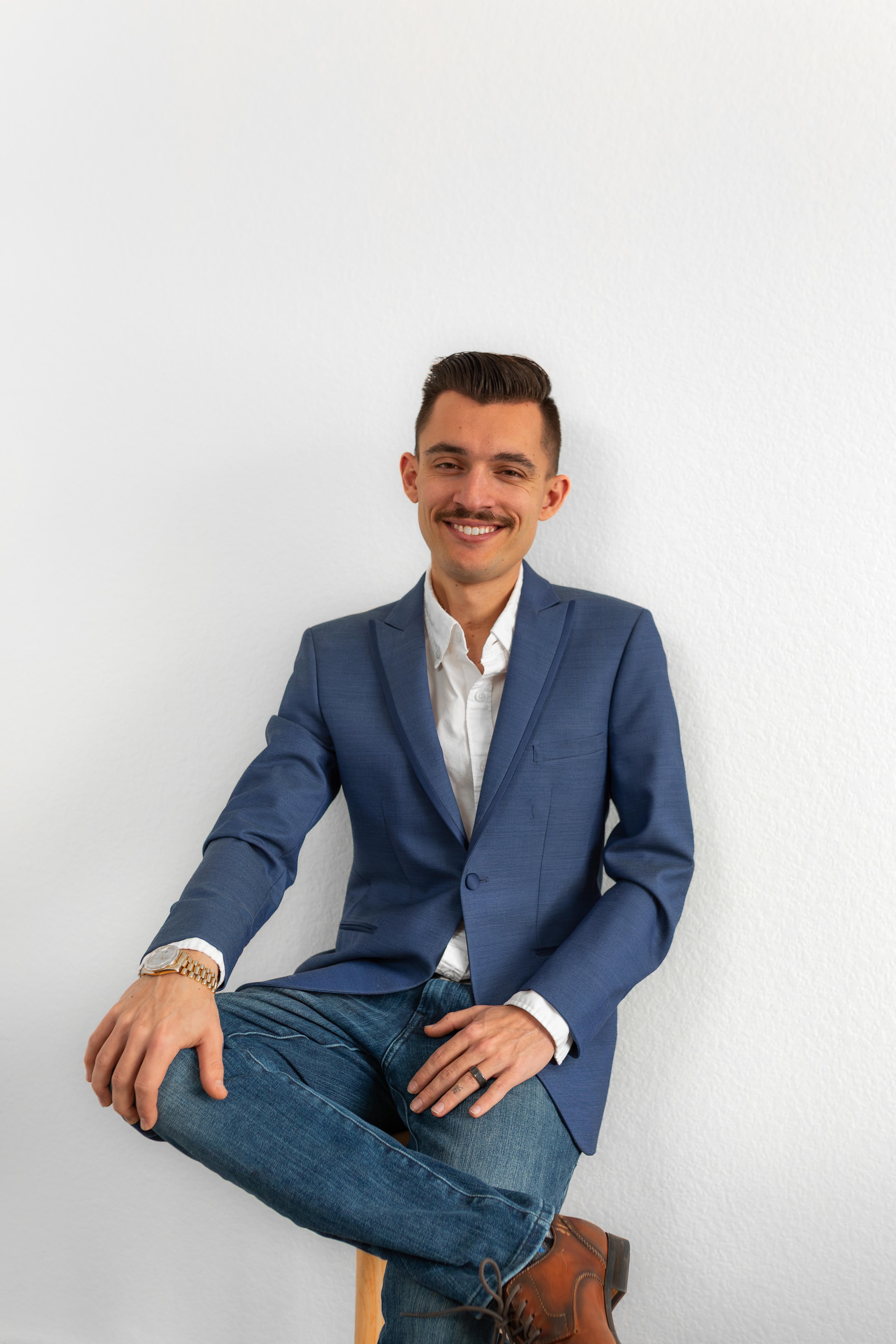
My Story
Why I Do This Work
I didn't get into this business because I needed a job. I got into it because I understand what it feels like to be the person on the other side of the table — the one with non-traditional income, the one who doesn't fit neatly into a box, the one who needs someone to actually think, not just process.
When I sit down with a borrower who's about to put their down payment on margin, I already know what that means. I don't have to google it. What keeps me here is simpler than any business reason: I cannot take the money with me when my time comes, but I can take the people. The ones I helped reach the next level — that's the ledger that actually matters to me.
To date, I have had exactly zero clients fall out of contract as a result of my work. That is not an accident. That is thoroughness.
What Makes Me Different
I Don't Wait for Problems to Surface. I Find Them First.
By the time my file reaches the underwriter, I've already found every problem and fixed it.
File structuring is almost like a game to me. I look at the full picture before anyone else does, which means I'm already noting discrepancies, sourcing documentation, and making the underwriter's job easier before they ever open the file. Zero clients have fallen out of contract as a result of my work. That is not an accident. That is thoroughness.
When I call you at 8pm about a problem, I'm not calling to tell you something broke. I'm calling to tell you I already fixed it.
I had a borrower whose appraisal came back rural, and the lender would only lend 70% LTV when my borrower needed 80% LTV on a 1.5 million dollar loan. The agent was distraught. But when I called, all I had to say was: relax, I already spoke to a different investor, they want our loan, and we'll be back on track tomorrow morning. Most brokers would have folded under that kind of pressure. That's not just service. That's an experience.
If your client has a rate problem, I already know how to solve it before we hang up the phone.
Rate sensitivity is usually one of the easiest conversations I can have, because I know exactly how to work with good realtor partners to get creative and use the seller's money to buy a client's rate down. I had a borrower who qualified well, but not within the range they were happy with. I took that information to my realtor partner and we got over $17,000 to buy the client's rate down, which reduced their monthly cost and put them at ease.
My Value Proposition
What You Get When My Name Is on the Referral
Before I open a file, I've already read the full picture — income quirks, asset sourcing, anything that could surface later — and I've addressed it before the underwriter ever sees it. That matters most to borrowers with non-traditional income and to the agents whose reputations depend on closings that actually close. When an appraisal came back rural on a $1.5 million loan and threatened to drop LTV from 80% to 70%, I had a new investor lined up before I made the call. When I call your client, they feel like a CEO. When I call you, the problem is already solved. That's what your referral feels like when my name is on it.
The Words I Own
How I Show Up, Every Time
I treat file structuring the way other people treat strategy — putting every piece of the puzzle together before anyone else sees the picture, which is why I've had exactly zero clients fall out of contract as a result of my work.
Whether it's pulling in a non-QM investor, negotiating over $17,000 in seller concessions to buy down a rate, or finding a new lender the same night an appraisal blows up a deal, I find the next move before anyone else knows they need one.
I build a triangle of trust — clients, agents, contractors — where every referral reinforces the others, because I know that if you start acting transactionally, other people will treat you the same way.
Because I'm a non-traditional income borrower myself, I don't have to research what it means when a client wants to put a down payment on margin — I already live that world, and that fluency is something most loan officers simply cannot replicate.
I want to be remembered for my work ethic, my kindness, and my sense of humor — not the commission — which means every person I work with tends to remember my name long after the closing table.
My Standard
Every email I send, every call I make, every file I touch should reflect one thing: that the person on the other side of this transaction is important, because they are. If I'm cutting corners to save myself time, if I'm calling with a problem instead of a solution, or if I'm treating a relationship like it ends at the closing table, I'm off-brand. I build files like a perfectionist, solve problems before anyone asks me to, and stay in people's lives because I actually want to. The standard is simple: would the person I helped feel like they were treated like a CEO, and would they still know my name five years from now?
Licensing & Credentials
Licensed in Four States
Dominick Howard | NMLS# 2666617 | Equal Housing Lender. This is not a commitment to lend. All loans subject to credit approval.
Ready to Work With Someone Who Has Already Solved the Problem?
Let's talk about your loan. I'll tell you exactly where you stand.